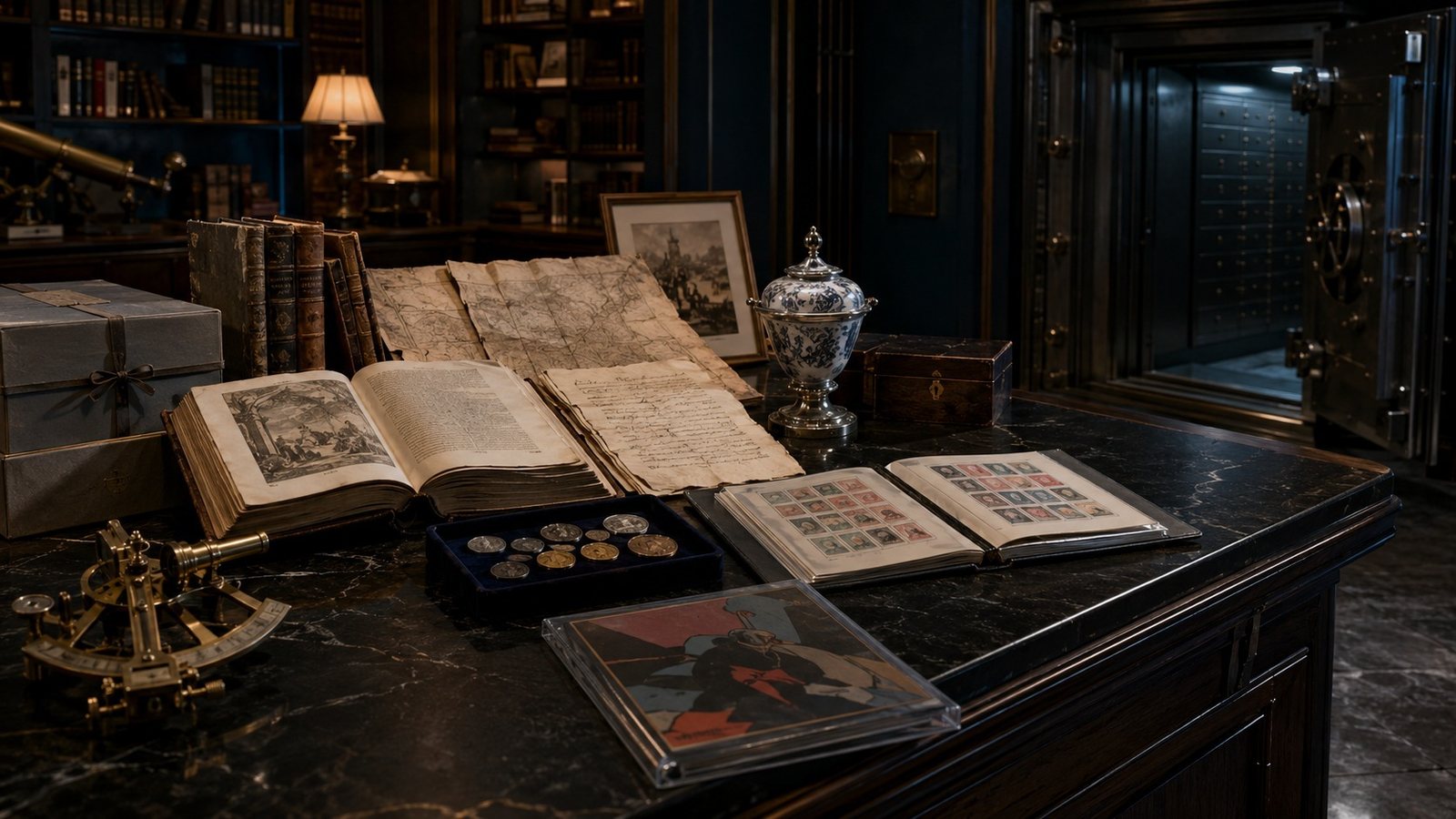
Raise liquidity against a rare object, an important heirloom, or a full collection without selling a single piece. LQD arranges discreet, asset-based capital secured by qualifying collectibles, with no credit check and a liquidity offer is often within hours. Your piece stays titled in your name and in insured storage, so you keep every bit of the upside. Eligibility and terms are not guaranteed.
Collectibles financing lets the owner of a rare object or collection access private capital without letting go of it. LQD arranges capital secured by qualifying rare books and manuscripts, coins and stamps, comic books, historical objects, decorative arts, treasured heirlooms, and full collections. Bring a single important piece or a broad, multi-item holding, and in many cases you can keep ownership while the value works for you.
Whether a piece qualifies rests on authenticity, ownership, provenance, condition, documentation, rarity, demand, legal transferability, and LQD's valuation and AI-powered underwriting. Age, rarity, a signature, or a certificate does not, on its own, establish value or eligibility. It is worth understanding how collateral-backed financing actually works before you prepare a submission.
A handful of figures often get blurred together, and they are not interchangeable. Sentimental value, the original purchase price, an insurance replacement figure, an auction estimate, a dealer asking price, and a resale figure can each differ from collateral value. Collateral value is LQD's view of what an object could realistically bring in today's secondary market, weighed against condition, documentation, transferability, and demand.
The category is intentionally wide, because meaningful tangible value comes in many forms. If you hold something substantial that does not slot neatly into LQD's other asset classes, you can still put a collection forward for review. Every conversation is confidential, and the strongest cases tend to start with objects backed by clear ownership, credible attribution, and a documented history rather than a famous name or an old date alone.
Nothing on this list is required to submit. Whatever you happen to have sharpens the valuation and helps our underwriting return a liquidity offer sooner:
Objects and collections across many fields can be reviewed. In every case ownership, clear title, legal transferability, and LQD's valuation and underwriting apply, and eligibility and terms are not guaranteed.
First editions, early printed books, manuscripts, and significant letters are reviewed where real collector demand exists. Authenticity, edition or issue, completeness, condition, and a documented chain of ownership carry the most weight; age or a signature alone rarely settles value.
Rare coins and numismatic holdings are weighed on authenticity, grade, rarity within the series, and recognized market support. A grading-service holder helps, but the grade alone does not establish eligibility, and demand and liquidity ultimately shape the figure.
Stamp and philatelic collections are reviewed on documented authenticity, condition, and the depth of collector interest for the issues involved. Expertization records and catalogue references help, while condition and demand swing widely across the field.
Documents, archives, and objects of recognized significance can be reviewed when authenticity, ownership, and legal transferability are clear. Historical importance can lift demand, but it does not by itself set collateral value, and some material may not be eligible.
Silver, ceramics, antique furniture, and other decorative arts are reviewed on maker or period, authenticity, originality, and condition. Hallmarks and maker's marks help place a piece, while restoration, replaced parts, and uncertain attribution move the read.
Rare maps, scientific instruments, and niche collecting fields can be reviewed where attribution is credible and secondary-market support is recognized. Condition, completeness, and documentation matter, and because demand can be narrow, each object is judged on its own market.
High-value trading cards, including sports, Pokémon, and Magic: The Gathering, along with key-issue and Golden Age comic books and signed memorabilia such as jerseys, balls, bats, and game-used gear, may be reviewed when the material is authenticated and professionally graded with documented demand. Third-party grading from services such as CGC or CBCS, population data, and authentication support the read, and these pieces are also covered under memorabilia and sports collectibles financing.
Inherited objects and heirlooms can be reviewed, though sentimental importance sits apart from collateral value. Estate records, prior appraisals, and evidence of clear ownership and title all help, and oral or family provenance may need supporting documentation.
A broader holding can be reviewed as aggregate collateral, whether it centers on one field or spans several. Each item is still assessed on its own for authenticity, condition, and demand, while the collection as a whole is weighed for depth and overall market strength.
The categories below are illustrative rather than exhaustive. Every object is judged on authenticity, ownership, provenance, condition, documentation, rarity, legal transferability, and demand, then run through LQD's valuation and underwriting.
Period furniture and antique furnishings are reviewed on maker or period, authenticity, originality, and condition. Joinery, hardware, secondary woods, and a documented history all inform attribution, and a well-documented piece is a different asset entirely from a look-alike of uncertain origin.
First editions, early printed books, illuminated manuscripts, notable letters, and historic documents are reviewed on authenticity, edition or issue, completeness, condition, and documented provenance rather than age alone. Demand swings widely by author, title, and field.
Rare coins, numismatic holdings, stamps, and philatelic collections are reviewed on authenticity, grade, rarity within the series, and recognized market support. Grading and expertization records help, but a grade or holder alone does not settle eligibility.
Rare maps, archives, scientific instruments, and objects of documented significance are reviewed where authenticity, ownership, and legal transferability are clear. Historical importance can lift demand but does not by itself set collateral value, and some material may not be eligible.
Sterling and presentation silver, important ceramics and porcelain, and documented decorative arts are reviewed on maker, period, and originality. Hallmarks and factory marks help place a piece, while condition and restoration history move the assessment in either direction.
Family estates and multi-item collections can be reviewed as aggregate collateral, starting from a preliminary inventory and photographs. Each object is still assessed on its own for authenticity, condition, and demand, and sentimental importance stays separate from collateral value.
Valuing an object for capital is category-specific and pulls many factors together rather than leaning on one number or one story. Nothing below is a fixed or guaranteed figure.
These numbers are not interchangeable. Sentimental value, the original purchase price, an insurance replacement figure, an auction presale estimate, a dealer asking price, and a resale figure can all differ, and none is automatically the collateral value. Insurance value usually reflects replacement cost and runs higher. An auction estimate is a pre-sale opinion rather than a firm determination. Collateral value is LQD's view of what an object could realistically bring in today's secondary market, subject to underwriting.
No lone certificate, signature, appraisal, or family story settles authenticity or collateral value. Attribution usually rests on more than one line of evidence, and the older or more valuable the object, the more of that record is needed before a review can move forward.
Depending on the piece, useful evidence can include expert opinions, recognized catalogues, dealer invoices, auction records, estate and archival documents, letters of provenance, institutional records, grading records, and, where it fits, scientific testing. A certificate alone may not decide authenticity or eligibility, a signature or mark alone does not establish it, and oral or family provenance may need supporting paperwork. An auction house accepting an object does not guarantee a liquidity offer.
Lawful ownership and transferability have to be established too. Certain cultural property, antiquities, archaeological material, protected objects, ivory, tortoiseshell, wildlife products, sacred or ceremonial items, and anything under export restriction may not be eligible, and material that may have been unlawfully removed cannot be supported. Where it matters, legality, ownership, and transferability are reviewed independently. LQD does not offer a legal determination on any specific object.
LQD implies no affiliation with, endorsement by, or authority on behalf of any auction house, grading service, museum, historical society, archive, dealer, expert, or authentication authority. Any organization or expert name appears only for accurate description.
These help a review; none of them on its own guarantees authenticity, value, or eligibility.
A full paper trail is not required to open a confidential review, but whatever you have helps with authenticity, ownership, provenance, legal transferability, valuation, and underwriting. The more that is on hand, the faster an object can be assessed, and a missing item does not automatically end the conversation.
Useful records and images include:
You can see where these fit in how a collection moves through review and valuation, and the answers to common valuation and custody questions cover most of the practical points owners raise before submitting.
A pledged object or collection is held in insured, secure storage suited to its category for the length of the arrangement. Intake is documented with condition photographs and an inventory on receipt, and objects come back in their received condition on repayment. Ownership stays in your name throughout.
Where transport is needed, LQD arranges specialist handling, proper packing, and insured shipping, with storage matched to the object, whether that is climate control for sensitive material or protective housing for books and documents. The details follow the object, its materials, and its fragility.
A broader estate or collection can be reviewed as aggregate collateral, starting from a preliminary inventory and photographs. Every object is still reviewed on its own, and eligibility and terms are not guaranteed.
Financing and selling are different tools, and neither is automatically the right one. A sale turns an object into cash for good and can suit an owner who wants a clean exit. It also means parting with the piece, paying dealer commissions or auction fees, accepting the timing of an auction or private sale, and taking whatever the market offers that day.
Financing against an object lets you keep ownership, preserve its family or historical meaning, hold a collection together, and sidestep an immediate sale while you meet a separate need or seize an opportunity. It has its own trade-offs: financing costs, due diligence, authentication expenses, custody, insurance, transport, and storage, plus default risk. A default on the loan can result in loss of the pledged object or collection.
Timing and market depth usually settle the question. An owner who does not want to sell into a thin market, or who wants an estate or collection to stay intact, may prefer to look at alternatives to selling right away. Others simply prefer to sell, and both deserve weighing against your own situation. There is more on private-capital options for collectors for anyone working through the same call.
Submissions and conversations stay private, with provenance review and documented intake. Your object is never publicly listed, consigned, or advertised, and there is no credit check.
Category-appropriate specialists and AI-powered underwriting assess authenticity, provenance, and market support rather than one number, so a liquidity offer is often ready within hours.
Specialist inspection, insured transport, documented intake, and secure storage suited to the object protect the piece for the full term, while ownership stays in your name.
Send photographs and whatever records you have on the object or collection. Nothing is required to open a confidential review, and available documentation moves the assessment along faster.
A category-appropriate specialist weighs authenticity, provenance, condition, and market support while LQD prepares a valuation. Ownership, title, and legal transferability are verified, with no credit check and no income verification.
Qualified submissions receive a liquidity offer, often within hours, following authenticity, ownership, provenance, condition, legal-transferability, valuation, and underwriting review. Funding can follow within 24 to 72 hours of approval, subject to documentation.
Send your collectible, heirloom, or collection in for a confidential review. Qualified submissions receive a liquidity offer after verification, ownership review, valuation, and underwriting, with no credit check. Eligibility and terms are not guaranteed.